A trip. A kitchen. A year with no debt. D×M holds those against your real numbers, once a month, and tells you in plain words what this month can actually carry.
What's inside
Most money apps start with what you spent. D×M starts with what you're for — then does the arithmetic against it.
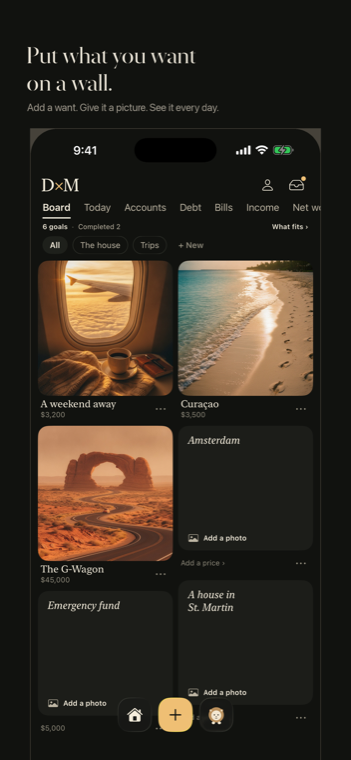
The things you want, as photographs, in collections you name. Not a list of line items. A wall you'll actually look at.
Which goal your money can carry now, which is next, and why — from your own figures, not a rule of thumb someone wrote for everybody.
A wall of what you already did, with the pictures. The part most money apps never show you, and the part worth keeping.
On your phone and your Mac
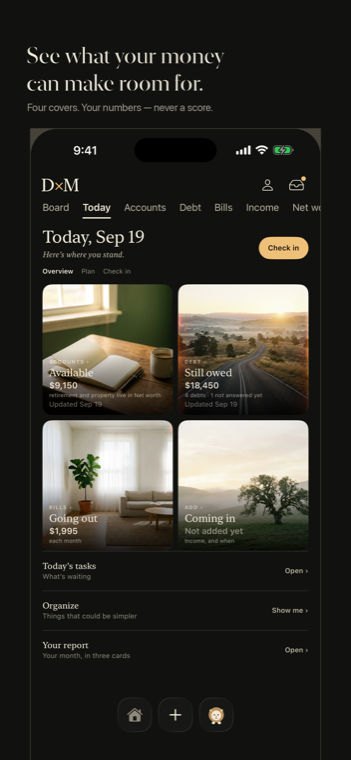
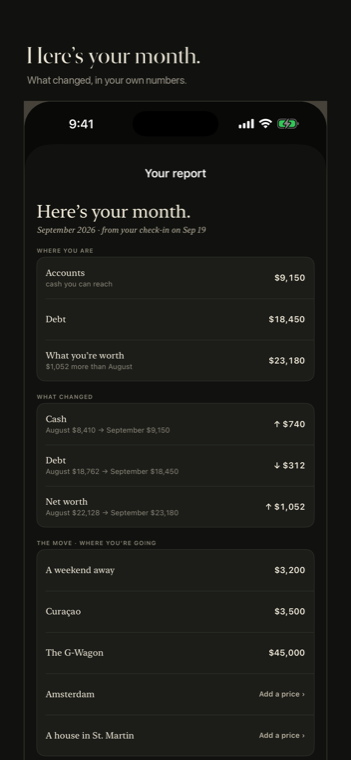
Check in when you like. D×M reads what changed and says it plainly — never a score, never a colour telling you how to feel.
How it works
A trip, a kitchen, a car, a year with no debt. Give each one a photograph, so it stays a real thing rather than a number.
What you have, what you owe, what you pay each month. You type them; D×M never reaches into a bank on your behalf.
Five minutes. D×M tells you what fits now, what's next, and what moved since last month — in sentences, not a dashboard.
What D×M never does
No green, no red. A debt is not an emergency and a balance is not a verdict — it's a fact you're allowed to read calmly.
If D×M doesn't know a figure, it says so. Unknown and nothing are different facts, and treating them the same is how money apps lie politely.
No streaks, no levels, no badges, no confetti. Your own money is not a game you can be losing.
They live in your own iCloud and nowhere else. There is no D×M server holding them, no account to make, and nobody here who can read them.
You type what you have. It takes a few minutes a month, and it means no credentials, no read-only token, and nothing to breach.
Two weeks free, then $7.99 a month.
Through the App Store, so you cancel the way you cancel anything else. One membership covers your Mac, your iPhone and your family. If you stop, everything stays yours — you can still open it, read it and export it.
Questions
No, and that's deliberate. You type your balances once a month. It takes a few minutes, it means there are no credentials to steal, and typing a number is a moment where you actually look at it — which is most of the value.
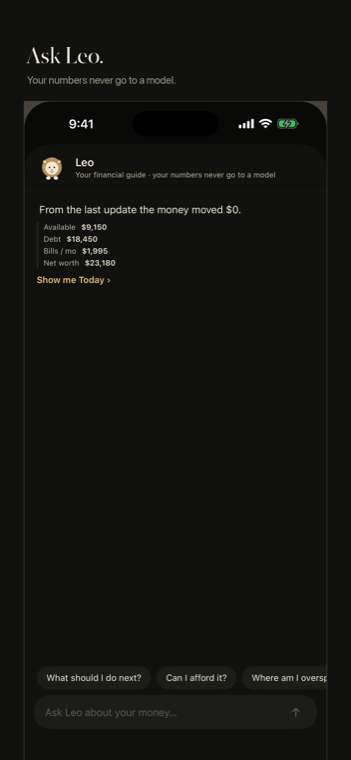
In your own iCloud, on the devices you sign in on. There is no D×M server holding your money and no account to create. Nobody here can read any of it — not because we promise not to, but because it never arrives.
Yes. The free period is Apple's introductory offer, so it runs through your Apple ID with a payment method attached, and nothing is charged for two weeks. You cancel in your Apple settings like any other subscription.
D×M goes read-only. Every figure, every month and every picture stays exactly where it is — you can open it, read it and export the whole record. It simply stops accepting new work. Locking someone out of their own financial history is taking it hostage, and we don't.
Yes. It belongs to your Apple ID, so buying on the Mac opens the iPhone and the other way round. Family Sharing is on, so your household is covered too.
No. There are no envelopes, no spending categories and no monthly allowance to blow. D×M answers a different question — not "what did I spend", but "can this month carry the thing I actually want".